Why Your Tight Calves Might Be Causing Your Low Back Pain
We need to talk about your calves.
Not because they're the most glamorous muscle. Not because anyone's writing Instagram captions about calf gains.
But because there's a solid chance your calves are quietly, sneakily, behind your back (pun intended) causing your low back pain.
Hear us out. 👇
Your Body Is a Chain — Not a Collection of Parts 🔗
This is the most important concept in understanding chronic pain: your body doesn't work in isolated pieces. Every structure is connected to every other structure through a continuous web of muscles, fascia, and joints.
Movement therapists call this the kinetic chain.
When every link in the chain moves well, your body distributes force efficiently and nothing gets overloaded. But when one link gets restricted — tight, weak, or stuck — the links above and below it have to compensate.
That compensation shows up as pain. Usually not where the restriction is. Usually somewhere up the chain.
|
So What Do Calves Have to Do With It? 🦵
Your calves — specifically the gastrocnemius and soleus — control ankle dorsiflexion. That's the motion of bringing your foot toward your shin, which happens every single time you take a step.
When your calves are chronically tight, your ankle mobility decreases. You lose the ability to dorsiflex properly. And your body, being the clever compensator it is, finds another way to get that motion.
Here's what that compensation chain looks like:
1️⃣ Tight calves → restricted ankle mobility |
2️⃣ Reduced ankle mobility → knees tracking inward or excessively forward to compensate |
3️⃣ Knee compensation → hips tilt forward (anterior pelvic tilt) |
4️⃣ Hip tilt → lumbar spine compresses and overworks |
5️⃣ Lumbar spine overwork → low back pain 🎯 |
And your low back, completely innocent in all of this, is just sitting there absorbing the consequences of a problem that started 36 inches below it.
The Trigger Point Factor ⚡
Tight calves also tend to develop trigger points — localized areas of hyperirritability within the muscle that can refer pain to completely different areas of the body.
Calf trigger points are particularly known for referring pain to:
The low back and sacrum
The back of the knee
The arch of the foot (hello, plantar fasciitis 👋)
The instep and big toe
This means your calf could be directly sending pain signals to your back — completely separate from the mechanical compensation issue above.
Two different mechanisms. One very tight calf. One very confused low back.
Why This Gets Missed 🤦
Here's why this doesn't get caught: most back pain treatment focuses on the back.
You stretch your hamstrings. You do core exercises. You get a lower back massage. Maybe it feels better for a day or two. Then it comes back.
Because nobody looked at your calves.
At Integrative Massage, our therapists are trained to follow movement patterns, not just chase pain. Before your session, we assess how your body is actually moving — including ankle mobility, hip mechanics, and the full kinetic chain — so we're not just treating your symptoms, we're addressing the movement pattern that created them.
What Treatment Looks Like 🛠️
If restricted calves are contributing to your back pain, your session at Integrative might include:
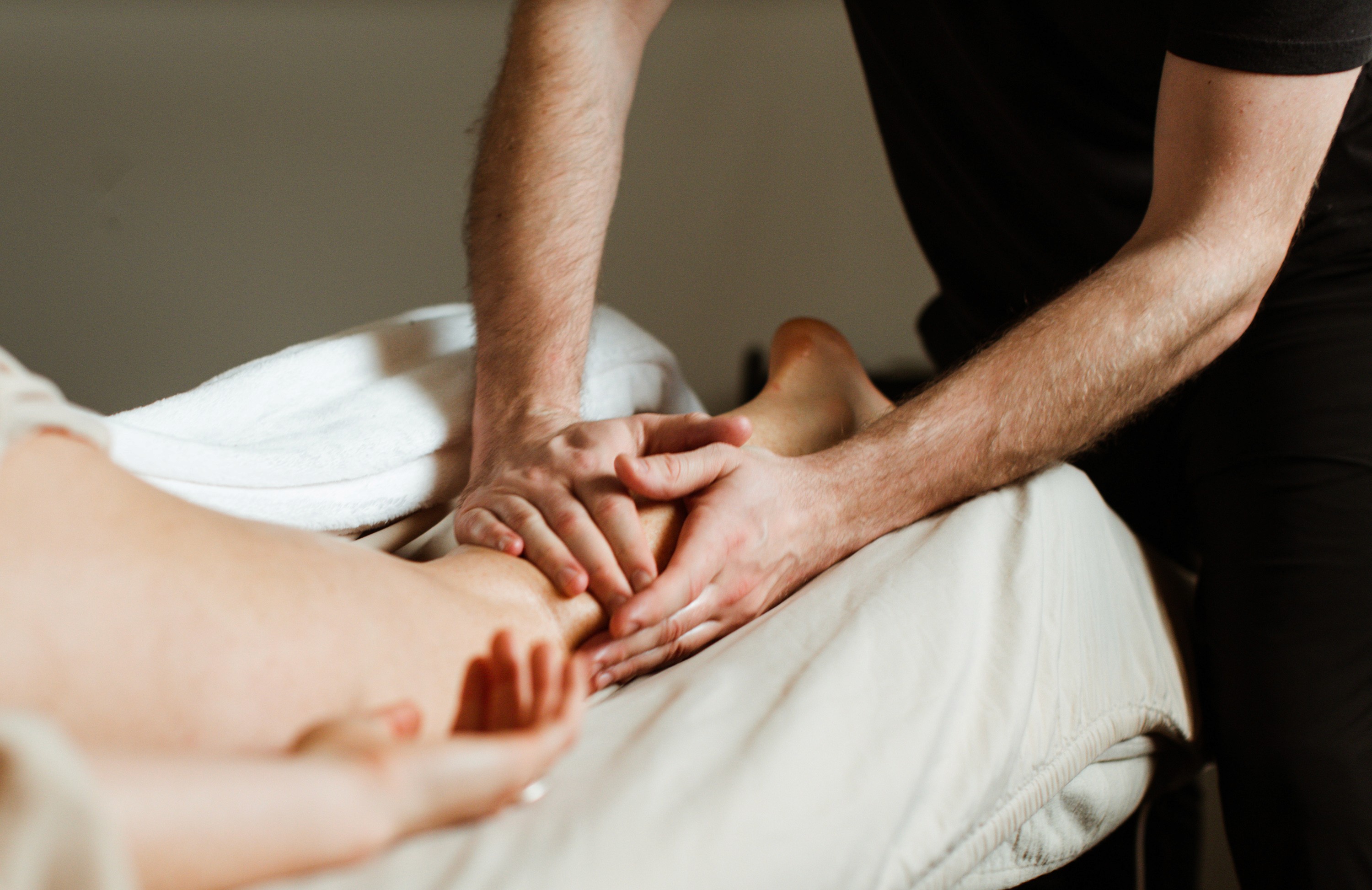
Deep tissue work on the gastrocnemius and soleus to release chronic tension
Myofascial release along the posterior chain from foot to hip
Trigger point therapy targeting specific referral patterns
PNF stretching to restore functional ankle range of motion
Hip and lumbar work to address the compensation patterns further up
At-home tools so you can maintain the progress between sessions
Because loosening the calves without restoring full movement patterns is like fixing a leak without turning off the faucet. We make sure the whole chain is working together again.
The Bottom Line 🎯
Low back pain is incredibly common. And incredibly misunderstood.
If you've been treating your back without looking at your ankles, your calves, and your full movement chain — you've been solving the wrong problem.
Your body leaves breadcrumbs. You just need someone who knows how to follow them.
|
Done guessing? Let's find the actual source of your back pain. Book a session at our Edina or Minnetonka clinic today. → Book Now |
We need to talk about your calves.
Not because they're the most glamorous muscle. Not because anyone's writing Instagram captions about calf gains.
But because there's a solid chance your calves are quietly, sneakily, behind your back (pun intended) causing your low back pain.
Hear us out. 👇
Your Body Is a Chain — Not a Collection of Parts 🔗
This is the most important concept in understanding chronic pain: your body doesn't work in isolated pieces. Every structure is connected to every other structure through a continuous web of muscles, fascia, and joints.
Movement therapists call this the kinetic chain.
When every link in the chain moves well, your body distributes force efficiently and nothing gets overloaded. But when one link gets restricted — tight, weak, or stuck — the links above and below it have to compensate.
That compensation shows up as pain. Usually not where the restriction is. Usually somewhere up the chain.
|
So What Do Calves Have to Do With It? 🦵
Your calves — specifically the gastrocnemius and soleus — control ankle dorsiflexion. That's the motion of bringing your foot toward your shin, which happens every single time you take a step.
When your calves are chronically tight, your ankle mobility decreases. You lose the ability to dorsiflex properly. And your body, being the clever compensator it is, finds another way to get that motion.
Here's what that compensation chain looks like:
1️⃣ Tight calves → restricted ankle mobility |
2️⃣ Reduced ankle mobility → knees tracking inward or excessively forward to compensate |
3️⃣ Knee compensation → hips tilt forward (anterior pelvic tilt) |
4️⃣ Hip tilt → lumbar spine compresses and overworks |
5️⃣ Lumbar spine overwork → low back pain 🎯 |
And your low back, completely innocent in all of this, is just sitting there absorbing the consequences of a problem that started 36 inches below it.
The Trigger Point Factor ⚡
Tight calves also tend to develop trigger points — localized areas of hyperirritability within the muscle that can refer pain to completely different areas of the body.
Calf trigger points are particularly known for referring pain to:
The low back and sacrum
The back of the knee
The arch of the foot (hello, plantar fasciitis 👋)
The instep and big toe
This means your calf could be directly sending pain signals to your back — completely separate from the mechanical compensation issue above.
Two different mechanisms. One very tight calf. One very confused low back.
Why This Gets Missed 🤦
Here's why this doesn't get caught: most back pain treatment focuses on the back.
You stretch your hamstrings. You do core exercises. You get a lower back massage. Maybe it feels better for a day or two. Then it comes back.
Because nobody looked at your calves.
At Integrative Massage, our therapists are trained to follow movement patterns, not just chase pain. Before your session, we assess how your body is actually moving — including ankle mobility, hip mechanics, and the full kinetic chain — so we're not just treating your symptoms, we're addressing the movement pattern that created them.
What Treatment Looks Like 🛠️
If restricted calves are contributing to your back pain, your session at Integrative might include:
Deep tissue work on the gastrocnemius and soleus to release chronic tension
Myofascial release along the posterior chain from foot to hip
Trigger point therapy targeting specific referral patterns
PNF stretching to restore functional ankle range of motion
Hip and lumbar work to address the compensation patterns further up
At-home tools so you can maintain the progress between sessions
Because loosening the calves without restoring full movement patterns is like fixing a leak without turning off the faucet. We make sure the whole chain is working together again.
The Bottom Line 🎯
Low back pain is incredibly common. And incredibly misunderstood.
If you've been treating your back without looking at your ankles, your calves, and your full movement chain — you've been solving the wrong problem.
Your body leaves breadcrumbs. You just need someone who knows how to follow them.
|
Done guessing? Let's find the actual source of your back pain. Book a session at our Edina or Minnetonka clinic today. → Book Now |